
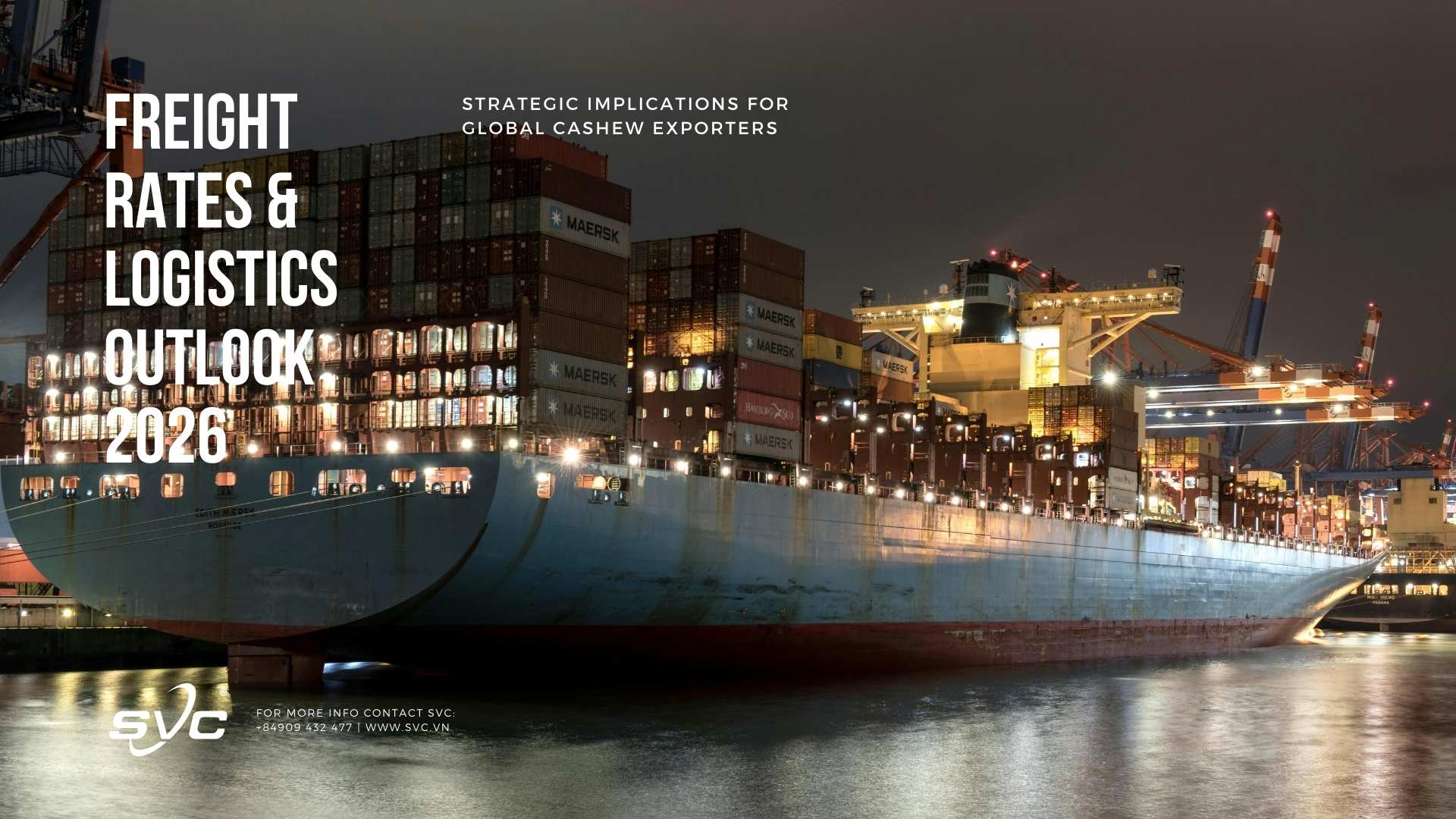
As the global cashew industry prepares for 2026, logistics and freight costs continue to play a decisive role in shaping export strategies, pricing structures, and buyer confidence. While the extreme volatility experienced during 2021–2023 has largely subsided, the logistics environment has entered a new phase defined by higher structural costs, tighter compliance, and greater operational complexity.
For cashew exporters, understanding these dynamics is no longer optional. Logistics has become a strategic function that directly influences competitiveness and long-term partnerships.
📦 Freight Rates in 2026: A New Cost Baseline
Industry consensus indicates that freight rates in 2026 are unlikely to return to pre-pandemic levels. Shipping lines have adjusted capacity management models, maintaining controlled vessel supply to protect margins while absorbing higher fuel, labor, and regulatory costs.
Key characteristics of the 2026 freight environment include:
- A higher baseline rate across major trade lanes
- Reduced likelihood of sudden price collapses
- Continued seasonal surcharges during peak periods
For cashew exporters, this means freight costs must be integrated into pricing strategy rather than treated as a variable expense.
🌍 Route-Specific Challenges and Risk Exposure
Logistics conditions vary significantly by destination market.
US and EU routes continue to face:
- Port congestion during peak import seasons
- Stricter customs and documentation checks
- Longer dwell times and higher demurrage risk
Asia-bound shipments benefit from shorter transit times but face capacity constraints during agricultural export peaks. Middle East routes remain efficient overall, yet are sensitive to transshipment disruptions at regional hubs.
Exporters must actively manage routing strategies and avoid dependence on a single shipping corridor.
📄 Compliance, Documentation, and Hidden Logistics Costs
Beyond freight rates, compliance-related costs are becoming more prominent. Sustainability reporting, traceability requirements, and enhanced customs scrutiny increase administrative workload and risk exposure.
Common cost drivers include:
- Documentation errors leading to shipment delays
- Additional inspections and storage charges
- Carbon-related surcharges on certain routes
Exporters with weak logistics governance face margin erosion even when headline freight rates appear stable.
🏷️ Logistics Performance as a Buyer Selection Criterion
Global buyers increasingly evaluate suppliers on logistics execution, not just price and quality. Reliable exporters are expected to provide accurate ETAs, transparent shipment updates, and proactive issue resolution.
From a buyer’s perspective, logistics reliability directly affects:
- Inventory planning and stock availability
- Retail launch timelines
- Working capital efficiency
As a result, logistics capability has become a core component of supplier qualification.
📊 Strategic Adjustments Required for 2026
To operate effectively in 2026, cashew exporters must adopt a more structured logistics strategy.
Key priorities include:
- Long-term agreements with shipping lines or forwarders
- Optimized container loading and packaging density
- Digital tracking and shipment visibility
- Scenario planning for peak-season disruptions
These measures help stabilize delivery performance and protect profit margins.
🌱 Logistics as a Competitive Advantage
In an increasingly standardized product landscape, logistics excellence offers meaningful differentiation. Exporters that consistently deliver on time, communicate clearly, and manage risk effectively gain buyer trust and secure longer-term contracts.
Vietnamese processors with integrated logistics planning and export experience are increasingly favored as strategic partners rather than transactional suppliers.
📌 Conclusion
Freight rates and logistics conditions in 2026 demand preparation, discipline, and strategic thinking. Exporters who treat logistics as an operational afterthought risk losing competitiveness, while those who invest in planning and execution will strengthen their market position.
With structured logistics management and export-ready systems, SVC supports global partners by navigating freight complexity and delivering consistent, reliable shipment performance in a challenging logistics environment.
📧 Contact for OEM & Export Coordination: thanh@svc.vn
📱 WhatsApp: (+84) 909 432 477
🌍 Think Cashew Vietnam, Think SVC.