
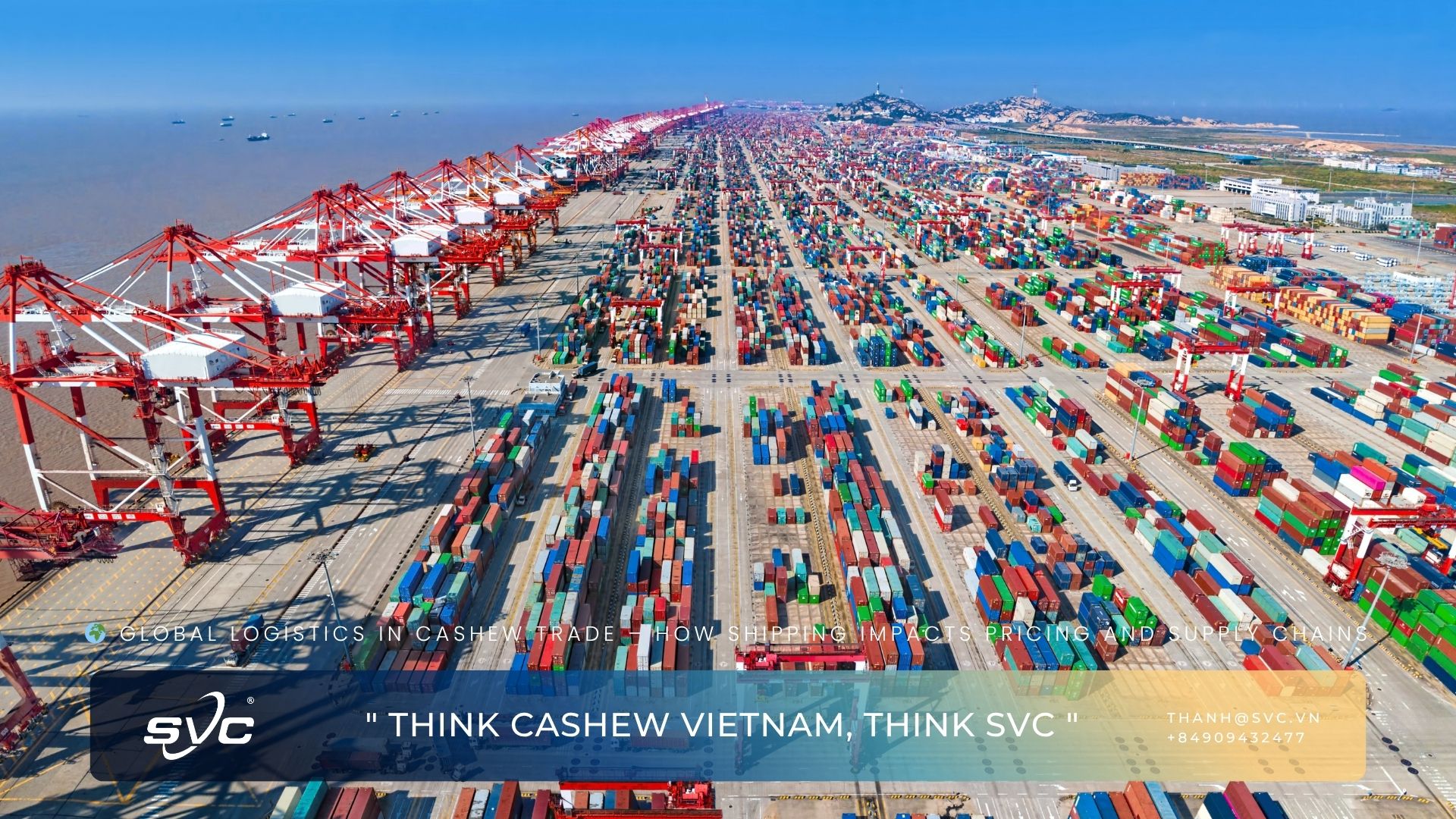
In global cashew trade, logistics is no longer just a supporting function—it is a critical factor that directly affects pricing, delivery timelines, and supply chain stability. For international buyers, understanding logistics dynamics is essential to managing cost and ensuring reliable supply.
As cashew kernels are traded globally—from Africa to Vietnam and then exported to the US, EU, and Middle East—shipping efficiency plays a central role in maintaining market balance.
In 2026, logistics continues to influence the cashew industry through freight costs, transit time, and route stability.
🚢 The Role of Logistics in the Cashew Supply Chain
The global cashew supply chain typically follows three stages:
• raw cashew nuts sourced from Africa
• processing in Vietnam
• export to global markets
This multi-stage structure makes logistics a key component in overall supply efficiency.
Any disruption in shipping can affect:
• delivery schedules
• inventory planning
• contract execution
• final product pricing
📊 Freight Cost Impact on Cashew Pricing
Freight costs are one of the most important variables in international trade.
When shipping costs increase, exporters must adjust pricing or absorb margin pressure.
Key logistics cost drivers include:
• fuel price fluctuations
• shipping route risks
• container availability
• port congestion
For buyers, even small increases in freight cost can significantly impact landed cost per kg.
🌎 Key Shipping Routes for Cashew Export
Cashew exports from Vietnam rely heavily on global maritime routes.
Major routes include:
• Vietnam → United States (Pacific route)
• Vietnam → Europe (via Suez Canal)
• Vietnam → Middle East (direct routes)
Each route has different risk profiles, transit times, and cost structures.
Changes in these routes—due to geopolitical or operational factors—can directly impact delivery schedules.
📦 Transit Time and Inventory Planning
Transit time is a critical factor for importers managing inventory.
Typical shipping timelines:
• US: 25–35 days
• EU: 30–40 days
• Middle East: 15–25 days
When delays occur, buyers may face:
• stock shortages
• increased storage costs
• disruption in retail supply
Reliable logistics coordination helps minimize these risks.
🔍 Logistics Risks in 2026
Despite improvements compared to previous years, several risks remain:
• geopolitical tensions affecting key shipping corridors
• fluctuating freight rates
• port congestion in peak seasons
• delays in container availability
These risks require exporters and buyers to plan more strategically.
🧠 How Buyers Should Manage Logistics Risk
To optimize supply chains, buyers should:
• work with exporters that have strong logistics coordination
• plan shipments earlier in the season
• diversify shipment schedules
• monitor freight trends regularly
In today’s market, logistics strategy is as important as product sourcing.
🌍 SVC Logistics Advantage in Cashew Export
SVC International JSC integrates logistics into its export operations to ensure reliable delivery.
Key strengths include:
• coordinated shipment planning
• experience with global export routes
• flexible container loading schedules
• clear communication with buyers
This allows SVC to maintain stable delivery performance across international markets.
📈 Logistics as a Competitive Advantage
In the modern cashew industry, logistics is no longer just an operational function—it is a competitive advantage.
Exporters who manage logistics effectively can:
• deliver faster and more reliably
• reduce risk for buyers
• maintain stable pricing
• build long-term partnerships
As global trade becomes more complex, logistics capability will continue to define leading suppliers.
📧 Market & Export Coordination
📩 Email: thanh@svc.vn
📱 WhatsApp: (+84) 909 432 477
🌍 Think Cashew Vietnam, Think SVC.