
In global food trade, safety is not negotiable. For cashew importers, ensuring that products meet strict hygiene and safety standards is critical to maintaining supply stability and protecting brand reputation.
One of the most widely adopted systems in food manufacturing is HACCP (Hazard Analysis and Critical Control Points). In the cashew industry, HACCP plays a vital role in identifying, monitoring, and controlling potential risks throughout the production process.
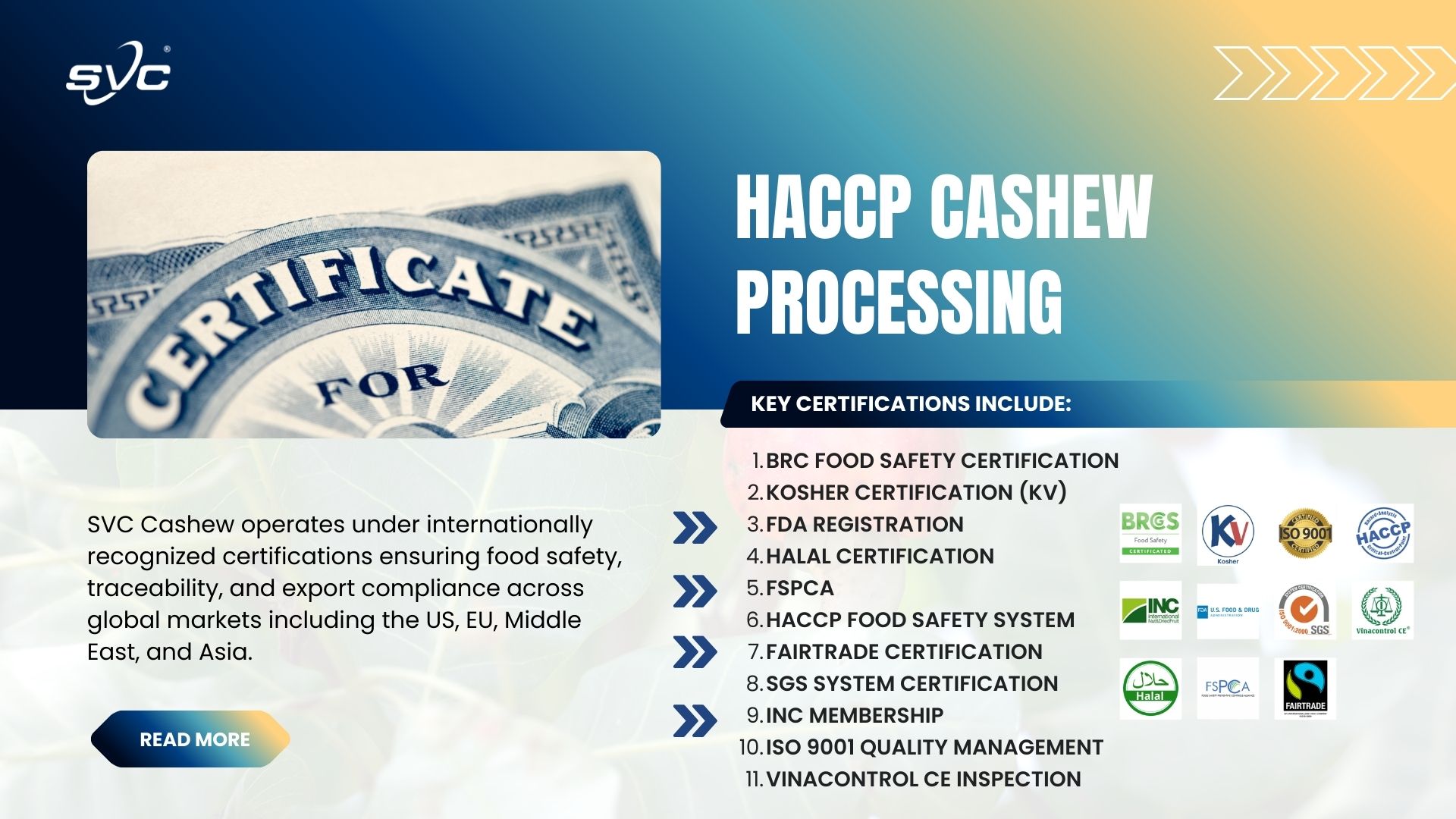
At SVC International JSC, HACCP is fully integrated into daily operations, ensuring that all cashew products meet international food safety requirements for export markets worldwide.
🏭 What is HACCP in Cashew Processing
HACCP is a systematic approach to food safety that focuses on identifying potential hazards and implementing control measures at critical stages of production.
In cashew processing, HACCP covers the entire workflow:
• raw material inspection and selection
• cleaning and preparation stages
• shelling and kernel extraction
• drying and moisture control
• sorting, grading, and packaging
Each step is analyzed to identify possible risks and establish preventive controls.
📊 Key Hazards Controlled in Cashew Production
HACCP systems are designed to control three main categories of risk:
• biological hazards such as bacteria or contamination
• chemical hazards including pesticide residues or aflatoxins
• physical hazards such as foreign objects
At SVC, these risks are managed through strict monitoring systems and standardized procedures.
Critical control points are defined to ensure that any potential issue is detected and addressed before products reach export stage.
🔍 Critical Control Points in SVC Factory
SVC’s HACCP system focuses on controlling risk at the most sensitive stages of production.
Key control points include:
• raw cashew input inspection and supplier verification
• temperature and moisture control during drying
• metal detection and contamination screening
• hygiene control in processing zones
• final product inspection before packaging
These controls ensure that every shipment meets international safety standards.
🌍 Why HACCP Matters for International Buyers
For importers and distributors, sourcing from a HACCP-certified cashew factory in Vietnam provides several advantages.
• compliance with global food safety regulations
• reduced risk of contamination or product recall
• consistent product quality across shipments
• improved approval process with retailers and distributors
HACCP is often a minimum requirement for entering regulated markets, especially in the EU, US, and developed Asian markets.
🧠 HACCP in Private Label and OEM Production
For private label brands, food safety is directly linked to brand trust.
Working with a HACCP-certified manufacturer allows buyers to:
• ensure safe and compliant products for retail markets
• maintain consistent quality across production batches
• reduce operational risks in supply chains
• meet regulatory requirements for international distribution
At SVC, HACCP is combined with other certifications to support OEM and private label production under strict safety conditions.
📦 Integrated Food Safety System at SVC
HACCP at SVC is part of a broader system that includes multiple international certifications.
The factory operates under:
• BRC Global Food Safety Standard
• FSPCA compliance for US market
• Halal and Kosher certifications
• FDA registration
This integrated system ensures that SVC can serve diverse markets with consistent quality and compliance.
🔗 Explore More About SVC Certifications
👉 SVC Certifications – Why Global Buyers Trust Our Cashew Factory
📧 Market & Export Coordination
📩 Email: thanh@svc.vn
📱 WhatsApp: (+84) 909 432 477
🌍 Think Cashew Vietnam, Think SVC.
Article tools
Continue reading