
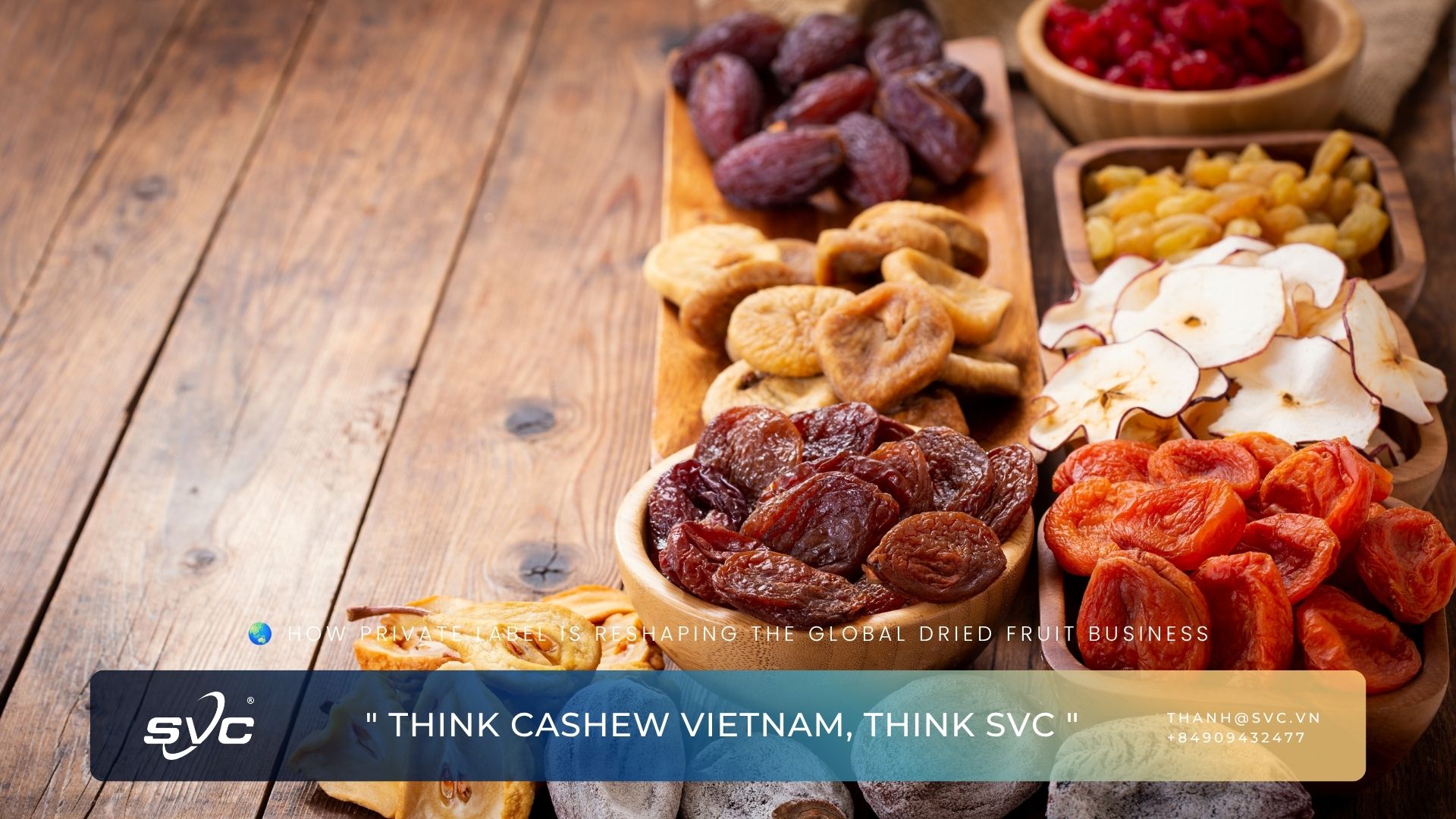
The global dried fruit industry is undergoing a major transformation.
For many years, the market was dominated by traditional wholesale trading. Manufacturers produced products, distributors imported them and retailers sold them under established brands.
Today, that model is changing.
Across Europe, North America, the Middle East and Asia, retailers and importers are increasingly investing in private label dried fruit products as a way to improve margins, strengthen customer loyalty and differentiate themselves in highly competitive markets.
This shift is reshaping how products are developed, manufactured, packaged and sold.
More importantly, it is creating entirely new opportunities for importers, distributors and OEM manufacturers worldwide.
The future of the dried fruit business may belong less to traders and more to brand builders.
📈 The Rise Of Private Label Worldwide
Private label products were once viewed as low-cost alternatives to established brands.
That perception has changed dramatically.
Modern private label products often compete directly with premium brands in terms of:
• Product quality
• Packaging design
• Consumer trust
• Retail visibility
• Product innovation
In many European markets, private label products now account for a significant share of supermarket sales across multiple food categories.
The dried fruit segment is following the same path.
Retailers increasingly view private label as a strategic growth engine rather than simply a margin improvement tool.
🛒 Why Retailers Are Expanding Private Label Programs
The economics are compelling.
Private label allows retailers to:
💰 Improve Profit Margins
Retailers gain greater control over pricing and profitability.
🏷️ Strengthen Brand Loyalty
Consumers become loyal to the retailer’s brand rather than a third-party supplier.
🚀 Differentiate Product Offerings
Exclusive products create competitive advantages.
📈 Increase Category Control
Retailers gain flexibility over product development and merchandising.
These benefits explain why private label continues expanding globally.
🥭 Why Dried Fruits Are Perfect For Private Label
Few product categories are as well suited for private label development as dried fruits.
Several factors contribute to this advantage.
Strong Consumer Appeal
Dried fruits benefit from positive consumer perceptions regarding health and natural ingredients.
Premium Positioning
Many dried fruit products occupy premium retail categories.
Product Diversity
Brands can easily expand into multiple fruit varieties and product concepts.
Flexible Packaging
Manufacturers can support a wide range of retail formats.
Global Demand Growth
The healthy snack movement continues supporting long-term category expansion.
This combination makes dried fruits particularly attractive for private label investment.
🌍 The Shift From Commodity To Brand
Historically, many dried fruit exporters focused primarily on selling products.
The market increasingly rewards something different:
Building brands.
The difference is significant.
Commodity Model
Sell products.
Compete on price.
Generate short-term revenue.
Private Label Model
Build brands.
Create customer loyalty.
Generate long-term value.
Increase profitability.
This shift is changing how importers approach the market.
Many companies now evaluate suppliers based on their ability to support brand development rather than simply provide products.
📦 Packaging Has Become A Competitive Weapon
Packaging plays a central role in private label success.
Consumers often make purchasing decisions within seconds.
As a result, packaging influences:
• Product perception
• Brand recognition
• Premium positioning
• Consumer trust
• Purchase intent
Modern dried fruit brands invest heavily in:
• Visual identity
• Shelf impact
• Sustainable packaging
• Consumer communication
• Retail presentation
Packaging is no longer a secondary consideration.
It has become a strategic business asset.
🚀 Innovation Is Expanding The Category
Private label programs are driving innovation throughout the dried fruit industry.
Retailers increasingly request:
• No-added-sugar products
• Premium tropical fruits
• Functional snack concepts
• Mixed fruit blends
• Sustainable packaging
• Health-focused product lines
As a result, manufacturers are becoming active participants in product development rather than simple processors.
The industry is evolving toward collaboration and innovation.
🌏 Why Tropical Fruits Are Leading Growth
One of the strongest areas of expansion involves tropical fruit products.
Consumers increasingly seek unique flavors and premium snack experiences.
High-growth categories include:
• Dried Mango
• Dried Jackfruit
• Dried Banana
• Dried Pineapple
• Dried Coconut
• Dried Guava
• Dried Papaya
• Dried Passion Fruit
These products combine novelty, natural appeal and premium positioning, making them ideal for private label programs.
🇻🇳 Vietnam Is Emerging As A Private Label Manufacturing Hub
Vietnam’s dried fruit industry is benefiting directly from this transformation.
The country offers several competitive advantages.
🌴 Abundant Tropical Fruit Supply
Year-round access to diverse fruit varieties.
🏭 Growing Processing Expertise
Manufacturers continue investing in export-oriented production systems.
📦 OEM Manufacturing Capability
Support for customized packaging and private label programs.
🚢 Export Infrastructure
Efficient access to global markets.
🌍 Competitive Production Environment
Strong foundation for scalable international supply.
These advantages position Vietnam as an increasingly attractive destination for private label sourcing.
🤝 What Importers Should Look For In A Private Label Partner
The most successful private label programs are built on strong manufacturing partnerships.
Key considerations include:
• Product consistency
• Food safety compliance
• Packaging flexibility
• OEM experience
• Innovation capability
• Supply continuity
• Export expertise
Choosing the right partner can significantly influence the long-term success of a brand.
🔮 The Future Of The Dried Fruit Industry
The dried fruit industry is moving beyond traditional wholesale models.
Private label development is changing how products are marketed, how brands are created and how value is generated.
Retailers want exclusivity.
Consumers want healthier choices.
Manufacturers want long-term partnerships.
Private label aligns all three objectives.
For this reason, the continued expansion of private label programs may become one of the most important drivers of growth within the global dried fruit business over the next decade.
🌍 Conclusion
Private label is no longer a niche strategy.
It is becoming a defining force within the global dried fruit industry.
Companies that embrace branding, innovation and product differentiation are increasingly outperforming those relying solely on traditional trading models.
As healthy snacking trends continue accelerating, the demand for private label dried fruit products is expected to grow across every major region.
For importers, retailers and manufacturers alike, the opportunity extends far beyond selling dried fruits.
It lies in building brands that consumers trust and choose repeatedly.
🌏 Global Supply Partnerships
Whether you are launching a private label dried fruit brand, expanding a retail portfolio or sourcing OEM tropical fruit products, SVC supports global buyers with manufacturing expertise, packaging solutions and international export capability.
📩 thanh@svc.vn
📱 (+84) 909 432 477
🏭 Factory: Dong Nai Province, Vietnam
🏢 Representative Office: Ho Chi Minh City, Vietnam
Sources
• International Trade Centre (ITC)
• Euromonitor Private Label Reports
• Global Healthy Snack Market Research
• Retail Industry Studies
• SVC Market Intelligence