

Cashew shelf life for raw kernels is about 24 months when they are stored at 0–10°C (32–50°F) and 55–70% relative humidity in their original sealed packing, according to the AFI specification. Heat, humidity, oxygen and damaged seals shorten it. Free fatty acids and peroxide value are the two numbers that show whether stored kernels are going rancid.
How long do cashew kernels keep?
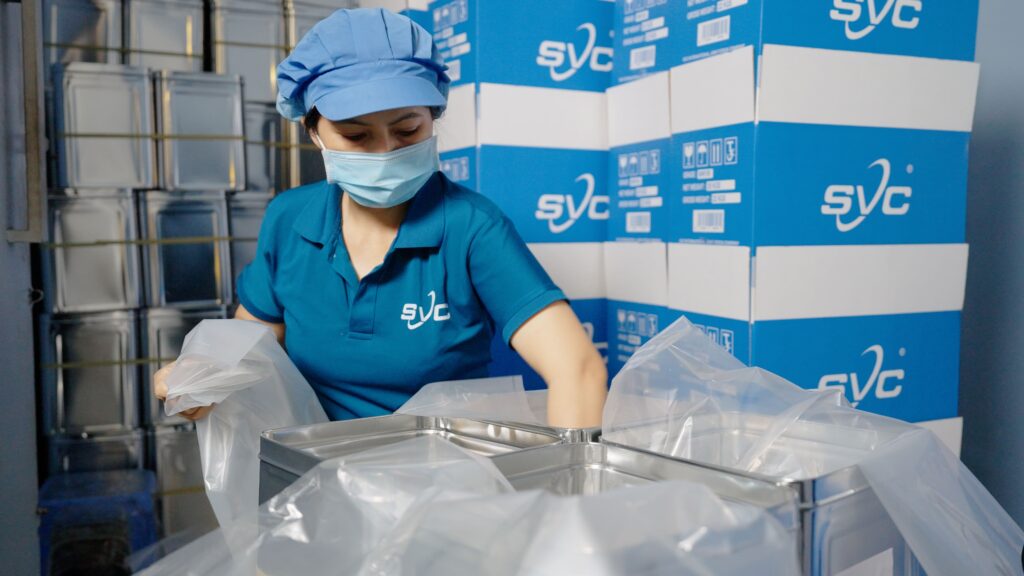
The AFI cashew specification gives a shelf life of about 24 months for raw kernels under proper storage, which it defines as 0–10°C (32–50°F) and 55–70% relative humidity. That assumes the kernels left the factory dry — AFI sets moisture at 3–5% — and stay in sealed, undamaged packing.
In a warm warehouse the same kernels keep for much less. Cashews are about half oil, and oil oxidises faster as temperature rises. The 24-month figure is a best case, not a guarantee for any storage condition.
What shortens cashew shelf life?
| Factor | Effect | Prevention |
|---|---|---|
| Heat | Speeds up oil oxidation and rancidity | Cool or cold storage |
| Humidity | Kernels absorb moisture; mould and softening | Keep packs sealed; control humidity |
| Oxygen | Oxidation of the oil | Vacuum or CO2/N2 packing; intact seals |
| Light | Speeds up oxidation | Opaque cartons; dark storage |
| Odours | Kernels absorb strong smells | Store away from chemicals, spices, fuel |
| Pests | Infestation | Clean, monitored warehouse |
How does packing affect shelf life?
Export kernels are packed to keep oxygen and moisture out. The two common methods are vacuum packing, where air is drawn out of the bag before sealing, and gas flushing, where the air is replaced. AFI requires food-grade CO2 only, at least 60% CO2 with the balance nitrogen, and airtight containers with no internal paper liners.
SVC vacuum-packs kernels without desiccants, typically in 22.68 kg (50 lb) cartons; why is explained in vacuum packaging without desiccants. Whichever method is used, a bag that has lost its vacuum or seal has lost its protection, so check seals on arrival.
How should you store cashews in your warehouse?
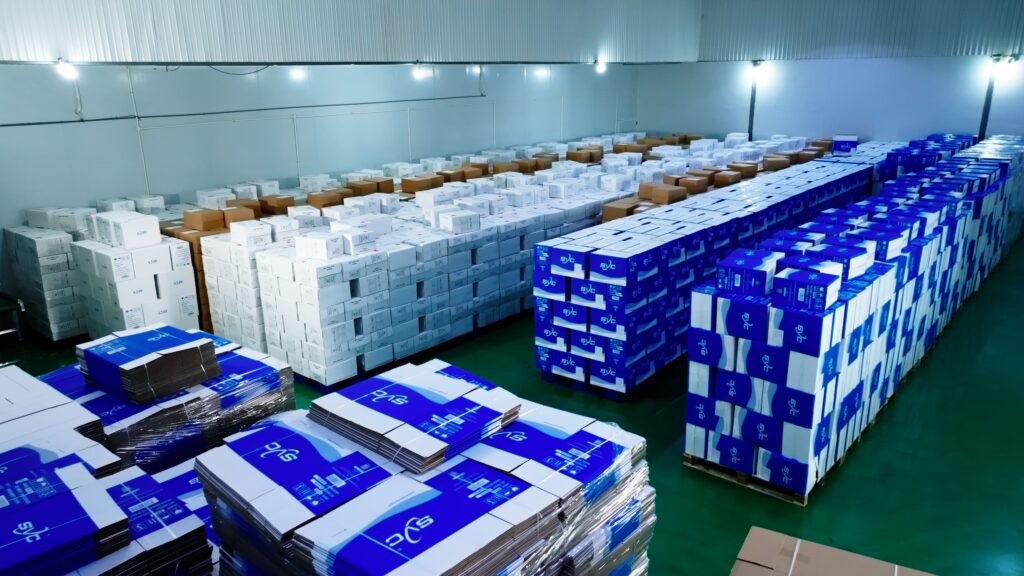
Lot codes on each carton are also what link the goods to the packing list and the certificate of analysis — see how to read a certificate of analysis.
How do you check stored kernels?
Two tests show whether the oil in stored kernels is breaking down. AFI sets free fatty acids at 1.5% max (as oleic acid) and peroxide value at 5 meq/kg max. Rising values over time are an early warning of rancidity, before it can be tasted.
- Taste and smell — a stale, bitter or paint-like note means rancidity.
- Texture — soft or rubbery kernels have absorbed moisture.
- Appearance — darkening, mould or insect damage.
- Laboratory tests — FFA, peroxide value and moisture on a sample from long-stored lots.
What about blocking and infestation?
Blocking is when kernels stick together in a solid mass, usually after temperature swings. AFI does not allow strong blocking; if severe blocking is found in two or more cartons, the remedy is to freeze the shipment for about 21 days and then temper it in cold storage for about five days. Live infestation is not allowed at all; if it is found in two or more cartons, the whole shipment is frozen at −18°C (0°F) for at least 21 days.
Temperature swings in the container can also cause condensation; see what can go wrong in transit.
Do roasted and flavoured cashews keep as long?
No. Roasting and seasoning change the oil and the surface of the kernel, so roasted, salted and flavoured cashews have a shorter shelf life than raw kernels. The shelf life depends on the recipe, the oil, the pack and the storage, and should be set by the manufacturer’s own shelf-life testing for each product. Ask for the shelf life and the test basis on the product specification.
Grades, packing formats and ordering for raw kernels are covered in Vietnam cashew nuts in bulk.
How long do cashews keep after a bag is opened?
Once a vacuum bag is opened, the kernels start taking in oxygen and moisture. Use opened bags first, reseal them tightly or transfer the kernels into airtight containers, and keep them cool. In a production plant, open only as many bags as the line will use in a shift or a day.
What about shipping in hot months?
Containers can get very hot at sea and in port, and temperature swings can cause condensation inside the bags. Ship in vacuum or gas-flushed packs, move the container into cool storage soon after arrival, and avoid leaving it in an open yard for days.
Should cashews be frozen for long storage?
Cold storage at 0–10°C is the AFI recommendation. Freezing is used as a remedy for infestation or blocking, not as routine storage.
Does the shelf life start at production or arrival?
At production. Ask for the production date or lot code on every carton, and plan stock rotation from that date.
Need a shelf-life specification for your order? Request a quotation →
Article tools
Continue reading