
Aflatoxin in cashew nuts is regulated by market. In the EU, cashew kernels for direct consumption or use as a food ingredient must not exceed 2.0 µg/kg aflatoxin B1 and 4.0 µg/kg total aflatoxins under Regulation (EU) 2023/915; the higher limits of 5.0 and 10.0 µg/kg apply only to nuts that will be sorted or physically treated before use. In the US, FDA may consider food with more than 20 ppb total aflatoxins adulterated. Require a lot-specific certificate showing both B1 and total results against your market’s limit.
What are aflatoxins, and why are there limits?
Aflatoxins are mycotoxins produced by Aspergillus moulds, which the European Food Safety Authority considers carcinogenic and genotoxic. Regulators set maximum levels for aflatoxin B1 — the most toxic form — and for the sum of B1, B2, G1 and G2. The guiding principle in EU law is that exposure should be as low as reasonably achievable.
For cashew, the risk is driven by moisture and temperature along the chain: raw nut storage, drying, and conditions after processing, including in transit. That is why moisture control at the factory and in the container — covered in our container loading guide — is part of aflatoxin control, not a separate topic.
What are the aflatoxin limits for cashew nuts in the EU and US?
| Market | Product category | Aflatoxin B1 | Total (B1+B2+G1+G2) | Basis |
|---|---|---|---|---|
| EU | Other tree nuts, incl. cashew — direct consumption or food ingredient | 2.0 µg/kg | 4.0 µg/kg | Reg. (EU) 2023/915 |
| EU | Other tree nuts to be sorted or physically treated before use | 5.0 µg/kg | 10.0 µg/kg | Reg. (EU) 2023/915 |
| US | Human food, general | No separate B1 level | Above 20 ppb may be adulterated | FDA CPG Sec. 555.400 |
Regulation (EU) 2023/915 replaced Regulation (EC) 1881/2006 in 2023 and is regularly amended, so check the current consolidated version. Unlike the US and Codex, the EU sets a limit for aflatoxin B1 in all nuts in addition to the total. In the US, the 20 ppb action level for total aflatoxins in human food is set out in FDA Compliance Policy Guide Sec. 555.400.
The gap matters: the EU ready-to-eat total limit for cashew (4.0 µg/kg) is five times stricter than the US level (20 ppb). A lot that clears a US port can fail at an EU border. Specify the limit for your destination, not a generic “meets international standards”.
Other destination markets set their own limits. For shipments outside the EU and US, confirm the applicable national standard with your importer of record before contracting.
What does “for sorting” mean?
The EU’s higher limits of 5.0 and 10.0 µg/kg are not an alternative standard for ready-to-eat product. Nuts imported under them must be labelled as goods that shall be subjected to sorting or other physical treatment to reduce aflatoxin contamination before human consumption or use as an ingredient, and member state authorities may verify compliance after processing.
- If you sell cashews to consumers or food manufacturers without further sorting, the 2.0 / 4.0 µg/kg limits apply to you.
- The 5.0 / 10.0 route only makes sense for a buyer that genuinely operates sorting and has the records to show it.
- The label and the intended use must match: declaring “for sorting” and then selling ready-to-eat is a compliance problem for the importer.
Why does sampling matter as much as the limit?
Aflatoxin contamination is not evenly spread through a lot; a small number of kernels can carry most of it. A single small sample can therefore miss a problem or overstate one. The EU and Codex sampling plans for tree nuts and peanuts are aligned under Commission Regulation 178/2010. In practice, write the sampling plan into your contract so that the supplier’s pre-shipment result and your destination result are measuring the same thing.
Screening or confirmatory testing?
| Level | Typical method | Use |
|---|---|---|
| Screening | Rapid tests (e.g. lateral flow, ELISA) | Fast checks on intake and in-process lots |
| Confirmation | Chromatography (HPLC, LC-MS/MS) at an accredited laboratory | Results relied on for export compliance and disputes |
For export certification, ask for confirmatory results from a laboratory accredited to ISO/IEC 17025, reported in µg/kg for both B1 and total, with the method and limit of quantification stated. A screening result is useful for process control but is not the document to rely on in a dispute.
What should you require from your supplier?
How does SVC control aflatoxin?
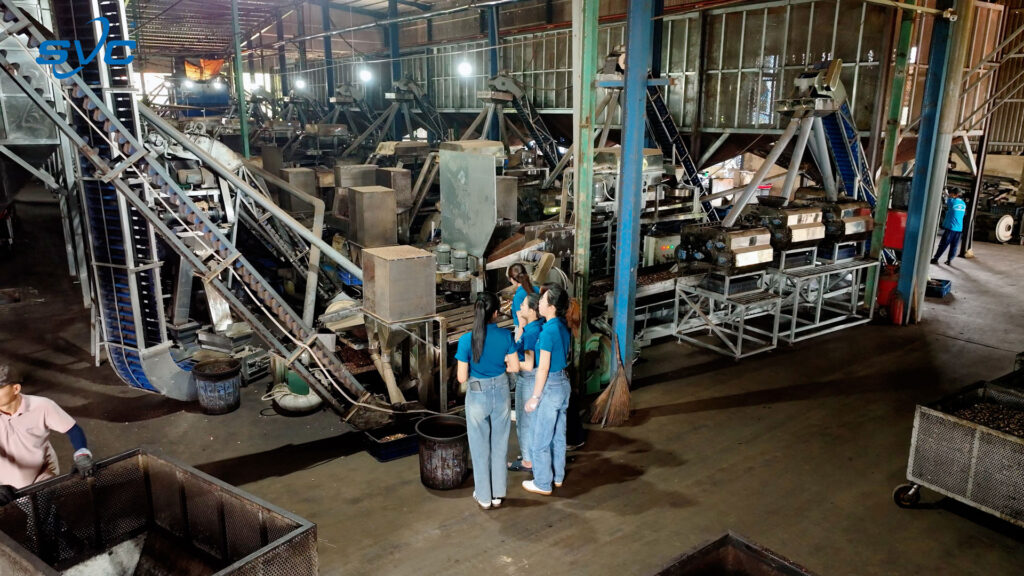
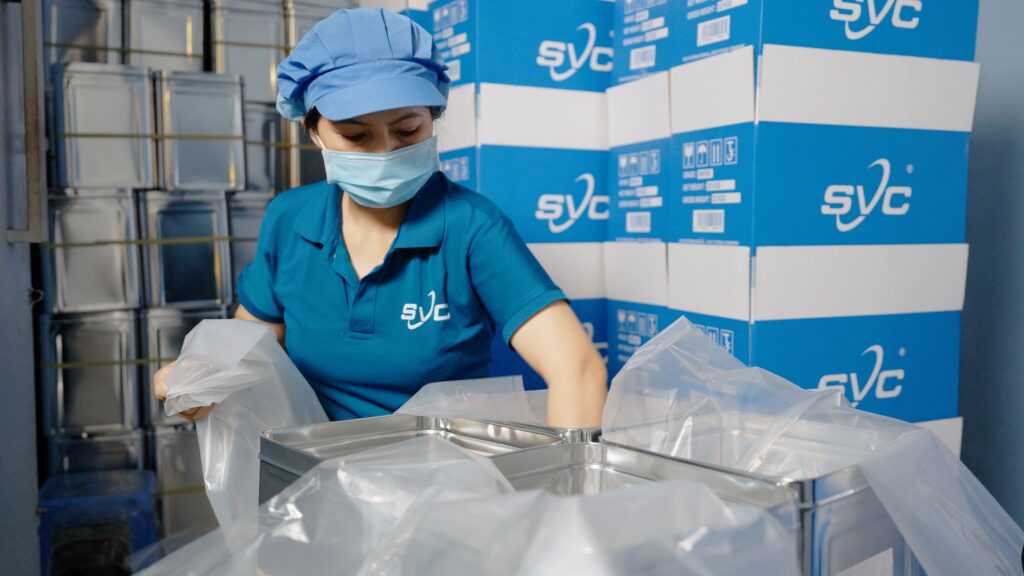
SVC processes cashew kernels under BRCGS and HACCP systems at its cashew factory in Dong Nai, Vietnam, with kernel inspection and quality control stations along the line and a Certificate of Analysis issued for each shipment. For EU and US buyers, aflatoxin results from an accredited laboratory are provided per lot against the destination limit, and buyers can nominate independent pre-shipment inspection — SVC works with recognised inspection bodies including SGS and Vinacontrol. For US buyers, these documents also support the importer’s own FSVP file, covered in our US market guide.
Other questions buyers ask
Is ppb the same as µg/kg?
Yes. One part per billion equals one microgram per kilogram.
Who is responsible for aflatoxin compliance when importing?
The importer placing the product on the market carries the regulatory exposure, which is why contract terms, sampling and reference samples matter. In the US, the importer’s FSVP obligations also apply.
Aflatoxin is the one parameter where there is no such thing as close enough. A lot at 5 µg/kg total is fine in one market and non-compliant in another. We would rather agree the destination limit and the sampling plan before the contract is signed than argue about a laboratory result after the container has landed.
Shipping to the EU or US? Request a quotation →
Article tools
Continue reading